
How to keep track of missed (qada) prayers
By Ali and Sofiya Khundmiri, makers of Waqt · Updated
Short answer
Count what you owe once, write it down, and make up a fixed number each day, for example one qada with each daily prayer. Then stop the list growing: log every daily prayer as on time, qada or missed, so new misses are caught the same day. Rules on order and estimating differ between the madhhabs, so check the details with a scholar.
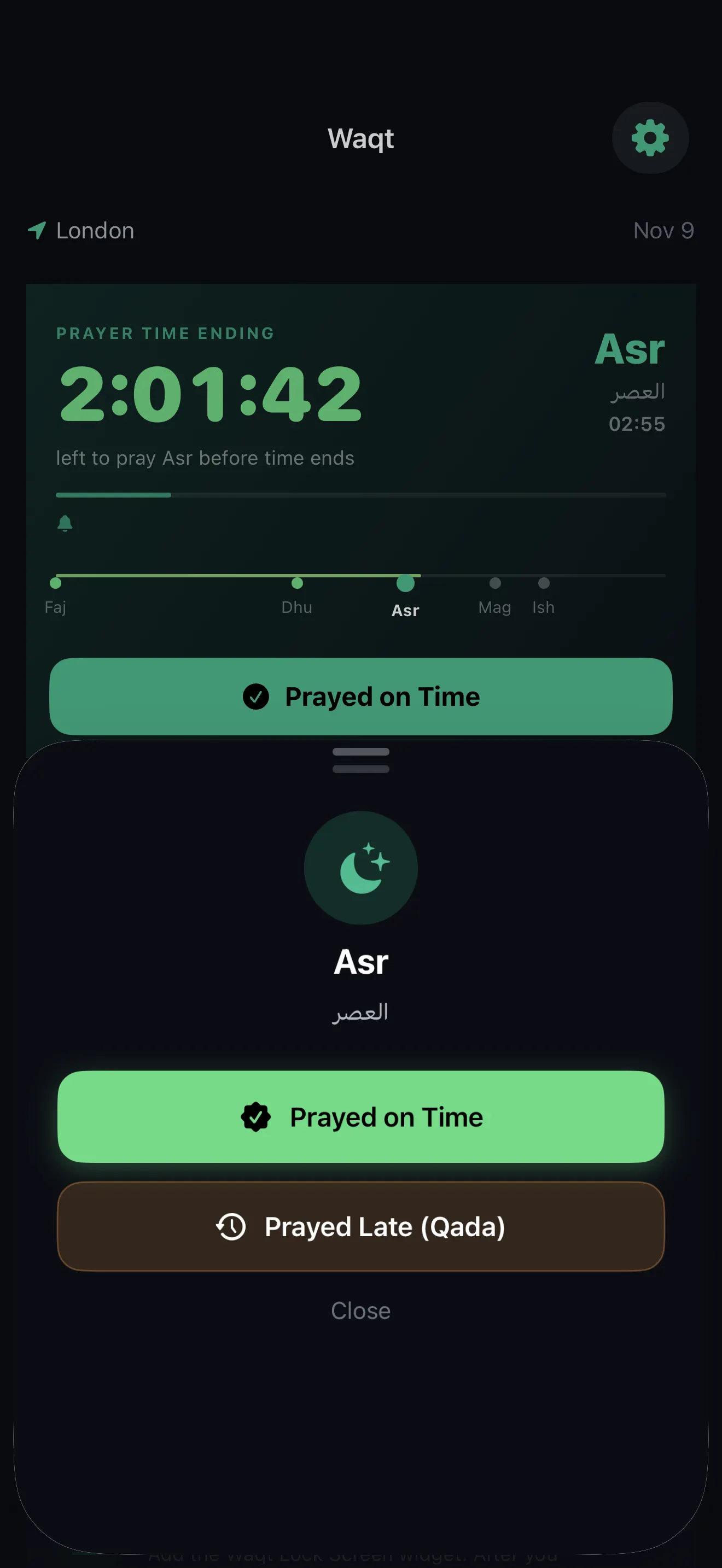
Stop the list from growing
Mark every prayer on time or qada with one tap. Your history shows each day as five dots, so nothing slips by unnoticed. Free, no account.
3 steps
- Count it once. Estimate the period you didn’t pray and turn it into a number of prayers. Write it down.
- Make up a little every day. An amount you can keep on your worst day, for example one qada with each daily prayer.
- Stop new misses piling up. Log every daily prayer as on time, qada or missed, so new misses are caught the same day.
Quick questions
What is a qada prayer?
Making up an obligatory prayer after its time has passed. The details (order, estimating years) differ between the madhhabs, so ask a scholar you trust about your situation.
How many qada prayers should I pray a day?
Whatever you can sustain. One with each daily prayer, five a day, is a common rhythm and clears about a year of prayers in a year.
Does Waqt calculate my lifetime qada?
No. Waqt handles the daily side, marking each prayer on time, qada or missed. For a lifetime count, use a notebook or a qada calculator app alongside it.
Free on iPhone · no account, no ads
Download Waqt